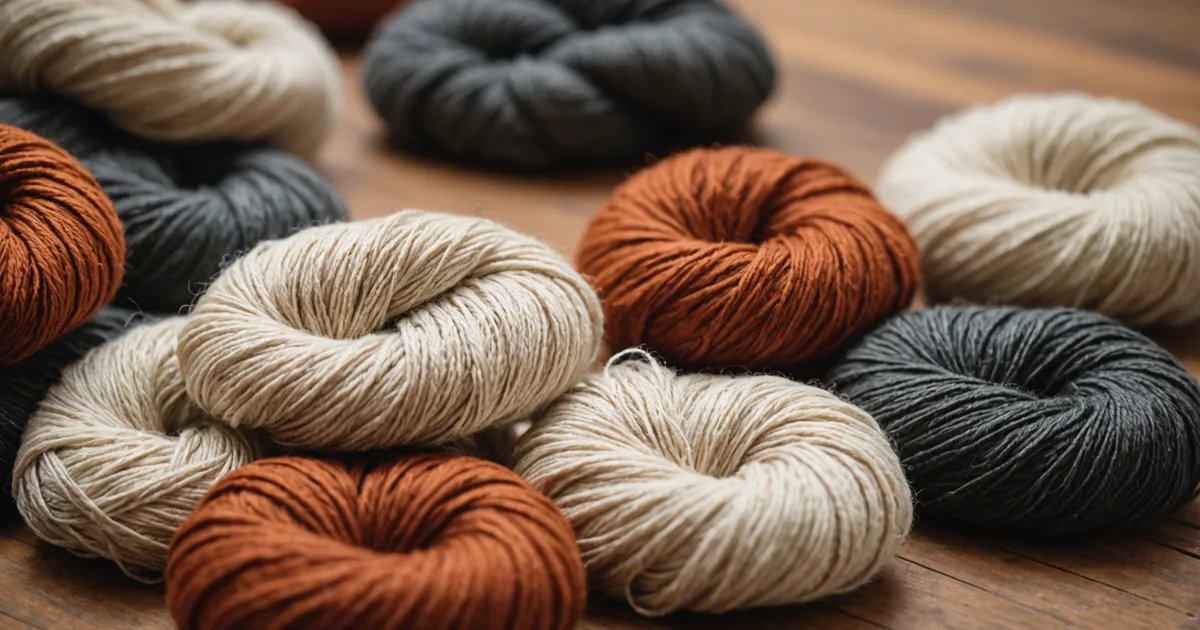
In October I spent a day at a small-scale textile producer in the Los Angeles area who supplies fabric to three of the independent labels in the Atorie index. The visit was arranged informally, through a designer introduction, and we were not there to write promotional material about the producer. We were there because we kept encountering their fabric in labels we were reviewing for the index and wanted to understand the production context better. What we found was worth writing down.
The facility was not what I had pictured. I had expected something closer to a small factory floor. What I encountered was closer to a well-organized studio: eight to ten people working across a space that handled everything from yarn receiving through finished bolt inspection. The equipment mix was industrial but not large-scale: four looms capable of running simultaneously, a small dyeing and finishing station, and a storage and quality-check area that occupied roughly a third of the space.
The pace is not an accident
The most striking thing about the visit was the pace of work. Not slow in the sense of leisurely, but measured in a way that was clearly deliberate. The person running the finishing station described the approach: each bolt of finished fabric is inspected by hand before it leaves, which takes between fifteen and forty minutes depending on the weave complexity and the length. There are no shortcuts in that step because defects that get through to a garment cutter are defects that get through to the final piece, and for a label producing thirty units per style, a defective bolt affects a meaningful percentage of the run.
That inspection pace means the facility has a natural production ceiling. They can comfortably supply the equivalent of roughly twelve to fifteen labels at the volumes those labels produce. They are not trying to grow beyond that. The producer's position was direct: their business model depends on being genuinely useful to a small number of independent labels, and the relationship quality that makes them genuinely useful would not survive scaling to more clients than they can maintain close technical communication with.
This is worth understanding as a context for the price of independent fashion. The textile sourcing for a label working with producers like this costs more per meter than sourcing from commercial mills at volume. That cost is not inflated margin. It is the cost of the production process: the inspection time, the small-batch dye work, the relationship overhead of working with six to eight client labels at close range rather than hundreds at arm's length.
What the dyeing process actually involves
One of the three labels supplied by this producer uses natural plant-based dyes exclusively. I had a general understanding of what natural dyeing involves, but watching the process in person was different from knowing about it abstractly.
The dyeing station was running a small batch of linen in an indigo vat when I arrived. Natural indigo dyeing is a reduction-oxidation process: the indigo is dissolved in a vat under reducing conditions, the fabric is submerged, and the color develops as the fabric is lifted and exposed to air. Each pass produces a slightly different depth of color depending on the time in the vat, the temperature, the consistency of the vat chemistry, and the particular behavior of that batch of indigo. The person managing the process was adjusting the vat chemistry by observation and experience, not by reading off a sensor panel.
The consequence of this is that no two dye batches are identical. The label using these fabrics builds that variation into how they describe their products: each piece is understood to be a specific instance of the colorway rather than a standardized color. For their customers, who are buying because they value the handmade quality of the textile, that variation is a feature. For a customer who expects industrial color consistency, it would be a problem. Understanding which kind of customer you are matters when you are considering a purchase from a label working this way.
The relationship between producer and designer
What I found most instructive about the visit was watching the communication between the producer and one of the designers who came in during the afternoon to check on a fabric order. The conversation was technical and specific in a way that suggested years of developed shared vocabulary: they talked about hand, which is how a fabric feels when you handle it, about drape, about how a particular finishing process had affected a weave they had both been concerned about.
That kind of communication is only possible when a producer and a designer have worked together long enough to develop a shared understanding of what they are each trying to achieve. The producer described it as the most valuable aspect of working at small scale: the ability to iterate with a designer across multiple collections until both parties fully understand what the other needs. A commercial mill cannot do that with small-volume clients because the economics do not support the relationship depth.
For the designer, the consequence is access to textile expertise that would otherwise be unreachable. They are not choosing fabrics from a swatch book. They are co-developing materials with someone who understands their work well enough to push back when a technical choice is likely to cause problems in production. That co-development produces better garments than the purely transactional sourcing model that mass production requires.
What this visit changed about how we think about the index
Before this visit, our label review process focused primarily on the finished garment: construction quality, aesthetic coherence, price-to-quality relationship. We were not spending much time on the fabric sourcing context because we did not have a practical way to evaluate it from the outside.
After this visit, we added a question to our label review intake that asks designers to describe their primary fabric sourcing relationship. We are not requiring small-batch textile producers. We are asking because the answer tells us something about how the label thinks about their work at the most fundamental level. A label that can describe a specific, ongoing relationship with a producer they know personally is usually one that is thinking carefully about their materials. A label that sources primarily from fashion week fabric markets or from generic import brokers is operating differently, not necessarily worse, but differently, and we want to understand the difference when we are evaluating whether a label belongs in the index.
We are not claiming that small-batch textile sourcing is inherently superior or that every good independent label uses this kind of producer. Many excellent independent designers source from established fabric houses in Japan, Portugal, or Italy, where the production standards are high and the minimums are accessible for small labels. What we are claiming is that when a label has a specific, personal, ongoing relationship with the people who make their fabric, that relationship is usually visible in the final garment in ways that are worth understanding.