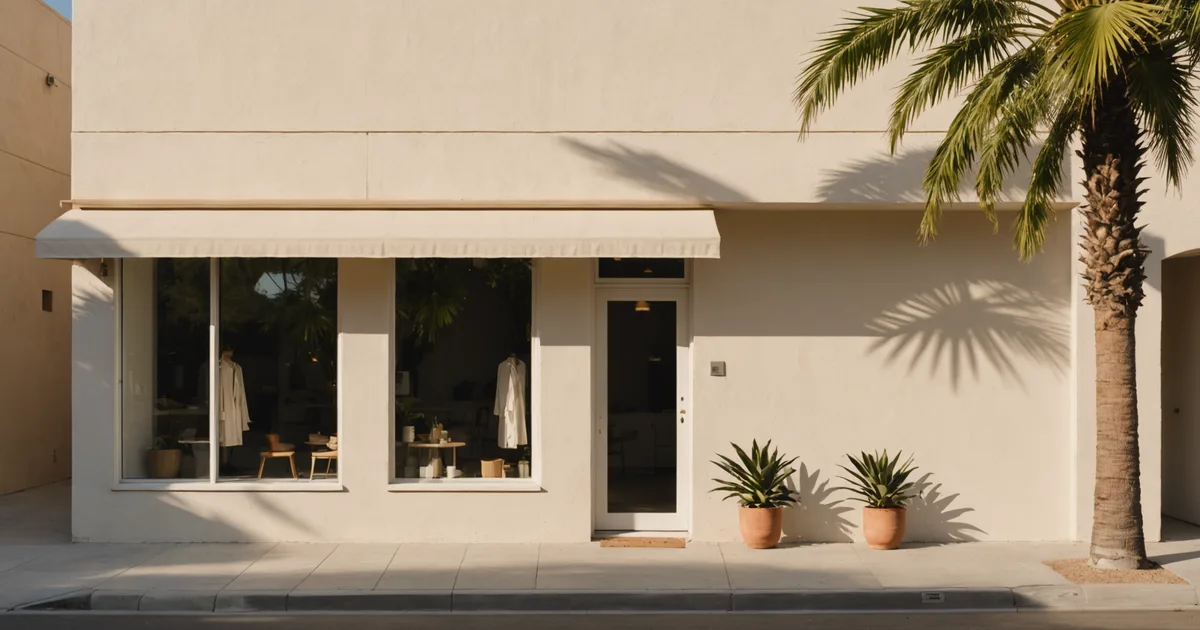
We are based in Los Angeles. A significant part of how we built the Atorie index was visiting boutiques in the city and talking with the buyers who run them. Those conversations taught us more about how independent fashion actually moves through the world than any other research we did in the first year of building the company.
This is a working list of boutiques we have visited more than once, not a comprehensive guide to LA shopping, not a sponsored list, and not a list of what is currently trending. These are the places we return to when we want to understand how good independent fashion is actually presented in person, because the way a boutique displays and contextualizes a garment is a real signal of whether the buyer understands what they are selling.
A word on format: we are not naming specific boutiques by name, because recommendations date quickly and boutique inventory changes. What we are describing is the type of boutique, the neighborhood character, and what distinguishes it, with enough detail that if you spend time in the city you will recognize the kind of place we mean.
The east side workroom boutiques
The most interesting concentration of independent fashion retail in Los Angeles, in our experience, sits in a cluster of neighborhoods running from Silver Lake through Echo Park into the Frogtown corridor. These are boutiques that often share DNA with the production studios that supply them. Several of the buyers we have spoken with in this area started as designers, or work directly with designers whose studios are a short drive away.
What distinguishes these shops is that the buying decisions are made by people who understand construction. When we asked one buyer why she had passed on a label she had been watching for two seasons, her answer was about seam finishing: she had finally handled the garments in person and the interior construction did not match the exterior presentation. That is exactly the kind of knowledge that does not come from looking at lookbook photographs. It comes from handling thousands of garments over years of buying.
The aesthetic tends toward considered neutrals, natural fiber weighting, and a preference for pieces with enough construction interest to carry a minimal overall look. These are not boutiques where you walk in looking for a statement piece. They are boutiques for people who want the statement to happen at the construction level, not the surface level.
The mid-city concept boutiques
A different kind of independent fashion retail exists in the neighborhoods between Koreatown and the Fairfax corridor: smaller spaces that function less as retail and more as editorial installations. The inventory turns less frequently, the price points tend higher, and the selection is often narrow: ten to fifteen labels, a handful of pieces per label, assembled around a coherent visual argument that changes seasonally.
We find these shops useful for understanding how garments work in context with each other. A stylist can put together an outfit that makes sense. A boutique can build an environment that makes sense. The better ones in this area have figured out how to do both. Walking into a well-assembled boutique with a coherent point of view and studying how the garments are grouped is one of the fastest ways we know to understand what visual coherence in independent fashion actually means.
The challenge with this category is consistency. Boutiques that function as editorial installations are dependent on the sustained taste and energy of their owners. Several of the most interesting ones we visited in 2023 and 2024 have since changed direction or closed. We include this type because when these shops are good, they are invaluable, but we are honest that the individual instances are harder to recommend with lasting confidence.
The westside establishment independents
West Los Angeles has a different kind of independent fashion landscape: boutiques that have been operating for fifteen to twenty years, that have built loyal customer bases, and that carry a mix of international independent labels alongside a smaller selection of local designers. These are not cutting-edge in the way the east side shops are. They are useful for different reasons.
What the established westside independents have is institutional knowledge about their customer. Buyers who have been serving the same neighborhood for two decades know what their regulars actually wear, how they actually dress, and what price points are real versus aspirational for their community. That knowledge produces a different kind of buying decision: less about aesthetic trend-setting and more about what will actually work for the bodies, budgets, and lives of the people who walk in.
We find these shops useful for calibrating our understanding of what practical independent fashion purchasing looks like at the customer level. The Atorie index includes some labels that these shops carry, and conversations with those buyers have informed how we think about labeling price range and wearability attributes.
What makes a boutique worth the visit
Across all the shops we have spent time in while building Atorie, the single most reliable indicator of quality is whether the buyer can talk about the labels they carry with specific technical knowledge, not just aesthetic appreciation. Aesthetic appreciation is easy. Anyone who spends enough time looking at fashion can develop the vocabulary for it. Technical knowledge is harder: it requires having handled the garments, understood the construction, and formed an opinion about whether the quality justifies the price at the construction level.
The second indicator is exclusion. Good boutiques say no to things. A buyer who accepts everything that has an interesting lookbook is not curating. A buyer who has a clear enough position that she can explain why she declined a label that many of her peers are carrying is someone who is making real editorial decisions. We have learned more about the independent fashion landscape from listening to buyers explain why they said no to something than from listening to them explain why they said yes.
The third indicator, which we did not expect going in, is how the staff talk about customers. The best boutiques we visited described their regulars not as demographics but as individuals with specific wardrobes and evolving directions. That is exactly the information asymmetry that Atorie is trying to address digitally: the relationship between a trusted boutique and a regular customer is one where real style knowledge gets shared in both directions. Building something that functions like that relationship, at a scale that goes beyond a single boutique's regulars, is what we are working on.