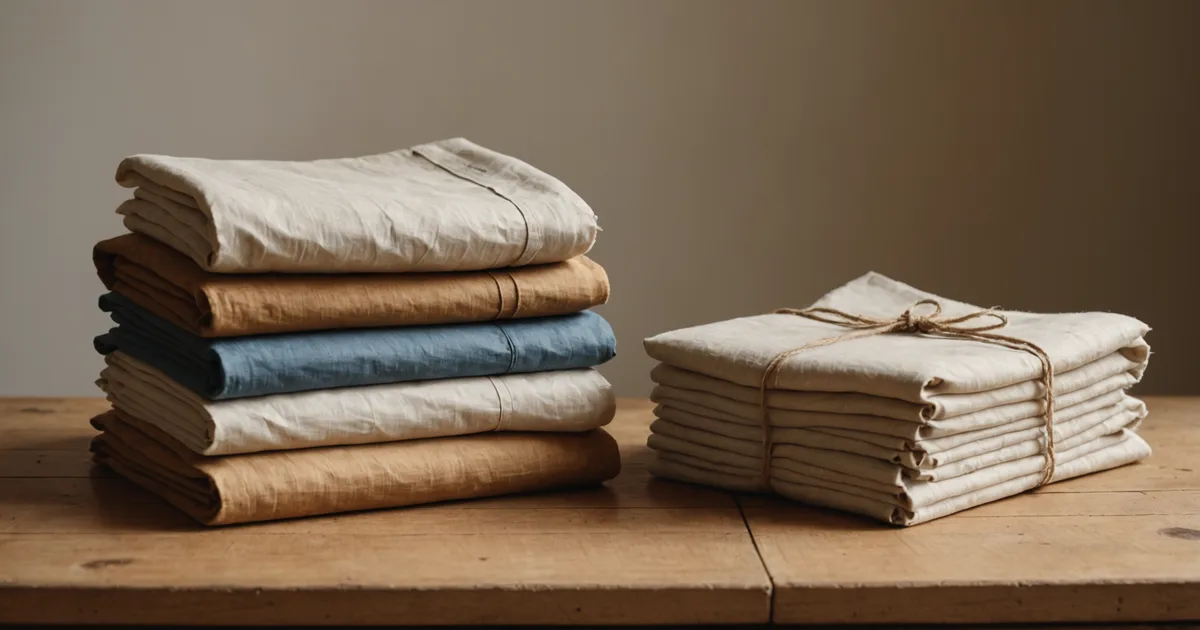
One of the persistent misunderstandings about small-batch fashion is that lower volume means lower quality. The opposite is more often true, but not for the reasons people assume. It is not simply that small labels "care more." It is that the economics of low-volume production force decisions that happen to produce better garments, and understanding those decisions helps explain what you are actually buying when you purchase from an independent label.
We spent several weeks in conversation with four designers whose labels are listed in the Atorie index: a knitwear designer based in Portland who produces three to four pieces per colorway per season, a tailoring label out of east Los Angeles that does runs of thirty to fifty pieces per style, a natural-dye workwear line from a small studio in the Hudson Valley, and a Los Angeles-based label that focuses on draped jersey pieces with most construction done in the same building where the designer works. None are named here by request; this is about process, not promotion.
The sourcing constraint that becomes a quality driver
Every designer we talked to described the same foundational constraint: they cannot access the fabric minimums that mass production requires. A commercial mill might ask for five hundred meters minimum per colorway. A small label producing thirty garments per style cannot get anywhere near that number. So they source from textile producers who work with smaller minimums, which means fabric mills in Japan, Portugal, and parts of Italy that still cater to small-order clients, or fabric brokers who deal in remnant and deadstock yardage.
That constraint produces an interesting result. The fabrics available in smaller minimums tend to be higher-construction, because the small-order textile market skews toward specialty mills that justify their minimums through superior material. The knitwear designer we spoke with described her fabric sourcing as "the luckiest accidental constraint" she has: she cannot get the cheaper jerseys at low minimum because they do not exist in small runs, so she ends up with yarns she could not have afforded to specify if she were buying conventionally.
This is not a universal rule. Small volume does not automatically mean access to better materials. But the structural constraint does push small labels toward parts of the textile supply chain where material quality is high and the economics have not been gutted by scale competition.
Why construction precision is easier at low volume
The tailoring label in east Los Angeles explained something that took us a moment to fully absorb. At thirty to fifty pieces per style, every garment passes through the hands of the same small team, often two to three people, from cutting through final pressing. Every fit issue that shows up in the first five units gets corrected before the remaining forty-five are touched. The quality control is not a separate audit step at the end of the process. It is built into the pace.
At mass-production scale, each worker handles one operation on thousands of units. Fit problems are systemic problems and fixing them mid-run is expensive. Tolerance standards get set not by what produces the best garment but by what keeps the line moving. The small-batch producer is running a different kind of operation. The pace is slow enough that the person cutting the fabric and the person finishing the seams are in close enough physical proximity to notice and fix problems in real time.
There is a flip side to this worth acknowledging. Low-volume production cannot guarantee quality the way a well-run mass-production facility with rigorous process controls can. We have reviewed labels that produce at low volume and produce inconsistently because the process control is not tight enough. Low volume is a necessary but not sufficient condition for the quality outcomes we are describing. What distinguishes the labels in this conversation is that they have built discipline around their small-scale processes, not that small scale automatically produces discipline.
The fit iteration that does not happen at scale
The natural-dye workwear designer described a fitting practice we found instructive. Before she finalizes a pattern for a run, she sews a prototype and wears it herself for three to five days of real activity. She documents where the garment creates friction, where it deforms under use, and where the proportions feel different in motion than they do on a dress form. Those observations feed back into the final pattern.
This is a standard practice in high-end fashion production, where a design house might iterate through multiple toile fittings before finalizing a pattern. It is not standard in commercial volume production, where time-to-market pressure and the cost of design iterations push toward producing from original patterns with minimal pre-production testing. Small-batch producers have the time to do it differently because their timeline is not governed by retailer buying calendars or seasonal trend cycles. They ship when the garment is ready.
That freedom comes with a cost: small labels cannot promise delivery windows the way a mass-market brand can. Several buyers we have spoken to while building the Atorie index named this as a real friction point. Independent retailers want to know when their stock is arriving. Small-batch designers often cannot commit to tight dates without compromising the production quality they have built their reputation on. The designers who handle this best are the ones who communicate the tradeoff honestly and find buyers who value the quality over the schedule certainty.
What this means for the person buying the piece
Understanding small-batch economics changes how you read the price on an independent label garment. A structured jacket from an independent tailoring label at $450 is not expensive in the same way a similarly priced garment from a mass retailer is expensive. The cost structure is different. The materials are likely sourced from a different part of the supply chain. The construction passed through fewer hands at a slower pace. The pattern went through more real-wear iteration before the run was cut.
None of that means every small-batch garment is worth its price. Some independent labels price aspirationally without the production quality to back it up. But the ones that have earned their pricing have usually done so by not taking the shortcuts that low price points require. When we evaluate labels for the Atorie index, we look specifically at whether the price-to-construction relationship is honest, because a label that charges small-batch prices while cutting mass-production corners is exactly the kind of thing that erodes trust in the category overall.
The designers we spoke with were uniformly candid about the difficulty of their economic position. Producing at low volume means high per-unit cost, which means price points that exclude many potential buyers. None of them described a path to comfortable scale without compromising what makes their work worth buying. They have each made a deliberate choice to stay small and maintain control, and that choice has real costs for them personally. That context matters when you hold one of their pieces. The price is not a premium for the label. It is the actual cost of making something this way.